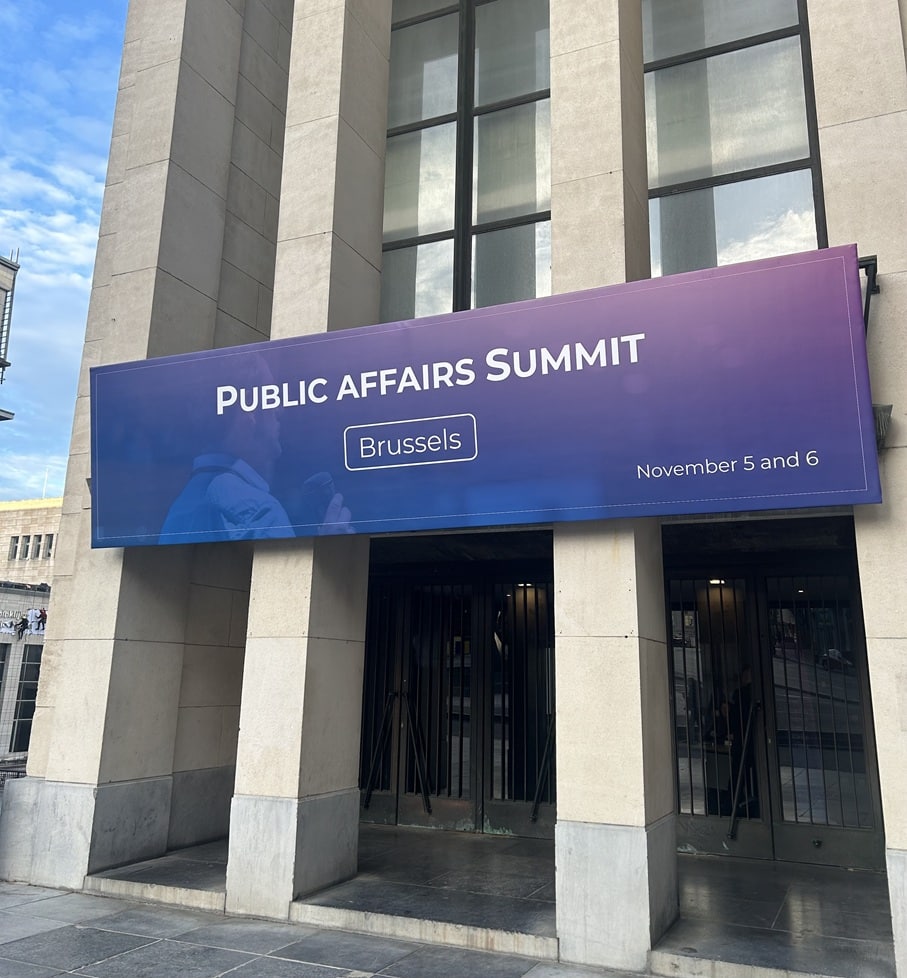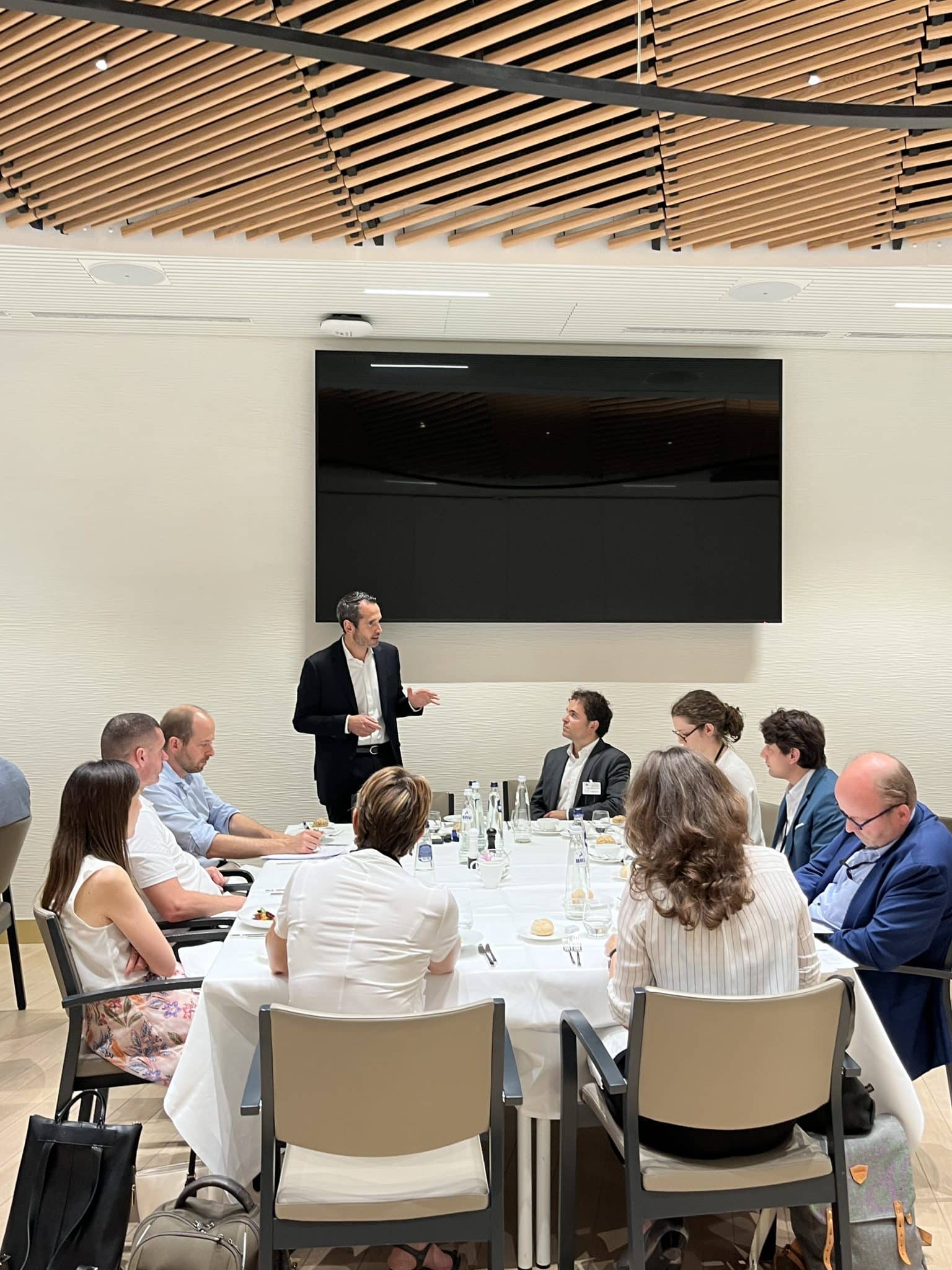
As the European Union steps up its industrial agenda, Euros / Agency Group brought together around 30 industry leaders and representatives of trade associations in Brussels with Pierre Jouvet, Member of the European Parliament and rapporteur for the Industrial Acceleration Act.
Held at the European Parliament, this exclusive lunch debate brought together public affairs directors from several sectors of strategic importance to the European economy: energy, chemicals, automotive, transport, recycling, mining and critical raw materials. The aim was to facilitate a direct exchange between the relevant economic stakeholders and the rapporteur for a piece of legislation set to shape European industrial policy in the coming years.
Presented as a follow-up to the Draghi Report and the Clean Industrial Deal, the Industrial Accelerator Act forms part of a decisive phase for the future of European industry. Behind the shared ambition to build a more sovereign, more competitive and more decarbonised Europe, this bill raises a central question: how can the industrial transition be accelerated without further undermining businesses already facing international competition, energy costs, regulatory constraints and supply chain pressures ?
The discussions held in Brussels provided an opportunity to compare Pierre Jouvet’s political vision with the operational realities faced by manufacturers. Three priorities in particular emerged.
The first concerns administrative simplification. Speeding up authorisation procedures, through one-stop shops or framework permits, is an essential lever for reviving industrial investment in Europe. But this simplification must deliver tangible results: a real reduction in processing times, clarification of responsibilities and no new compliance burdens being passed on to businesses.
The second priority relates to European industrial resilience. The criteria for European preference, often summarised by the objective of strengthening the ‘Made in EU’ label, must be carefully defined. Their implementation in public procurement and supply chains will need to strike a balance between strategic protection, price competitiveness and operational feasibility for businesses.
Finally, participants emphasised that competitiveness remains an essential prerequisite for decarbonisation. Without access to affordable energy, secure supplies of critical raw materials and adequate funding for innovation, the green transition risks remaining out of reach for many European industrial sectors.
For Euros / Agency Group, the Industrial Accelerator Act represents a major test for the European Union. It must demonstrate its ability to balance economic strength, the green transition and strategic sovereignty in an increasingly competitive global environment. As the legislative timetable gathers pace, with the draft report due to be tabled on 7 September, discussions between public decision-makers and economic stakeholders will be crucial.
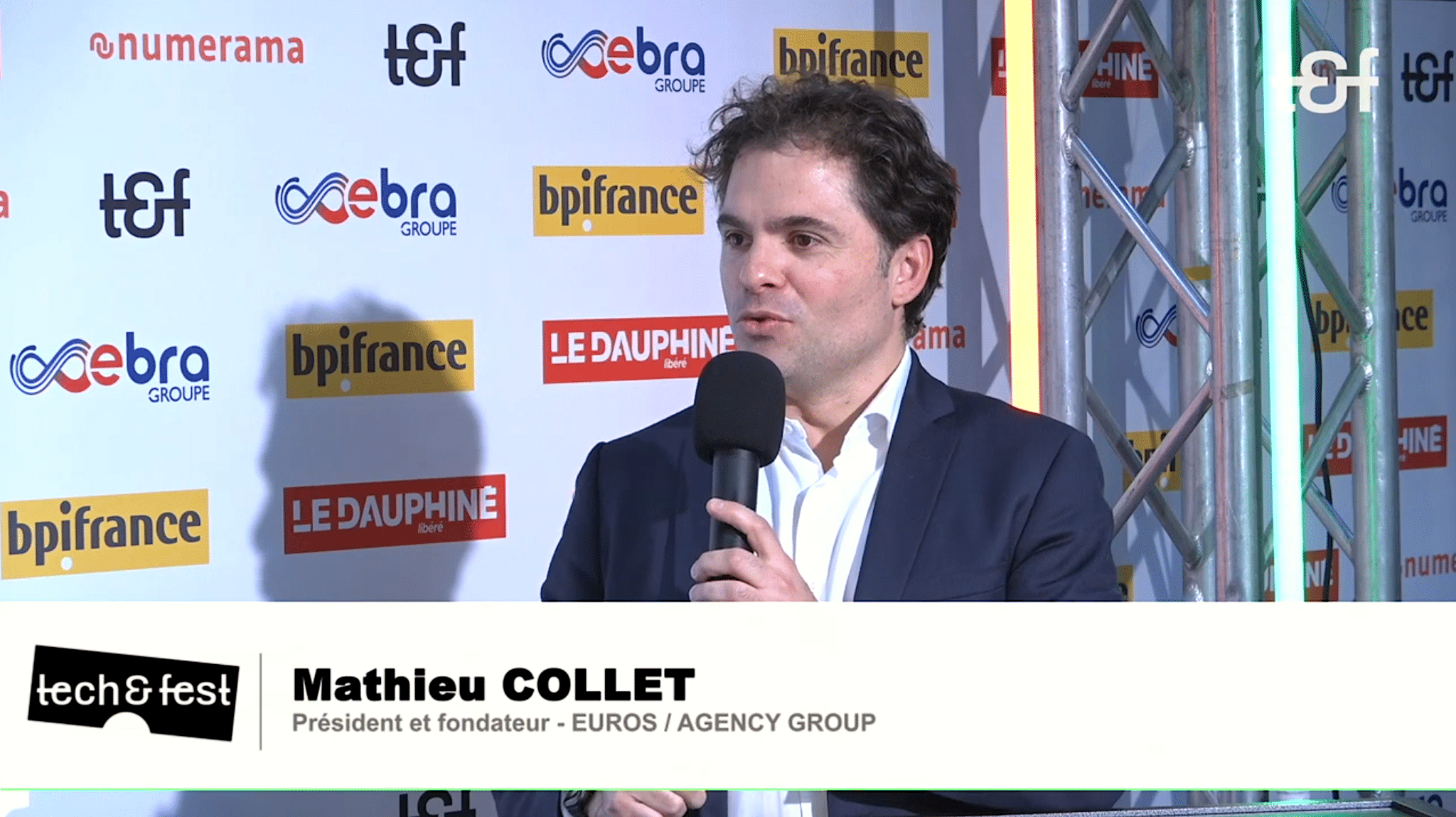
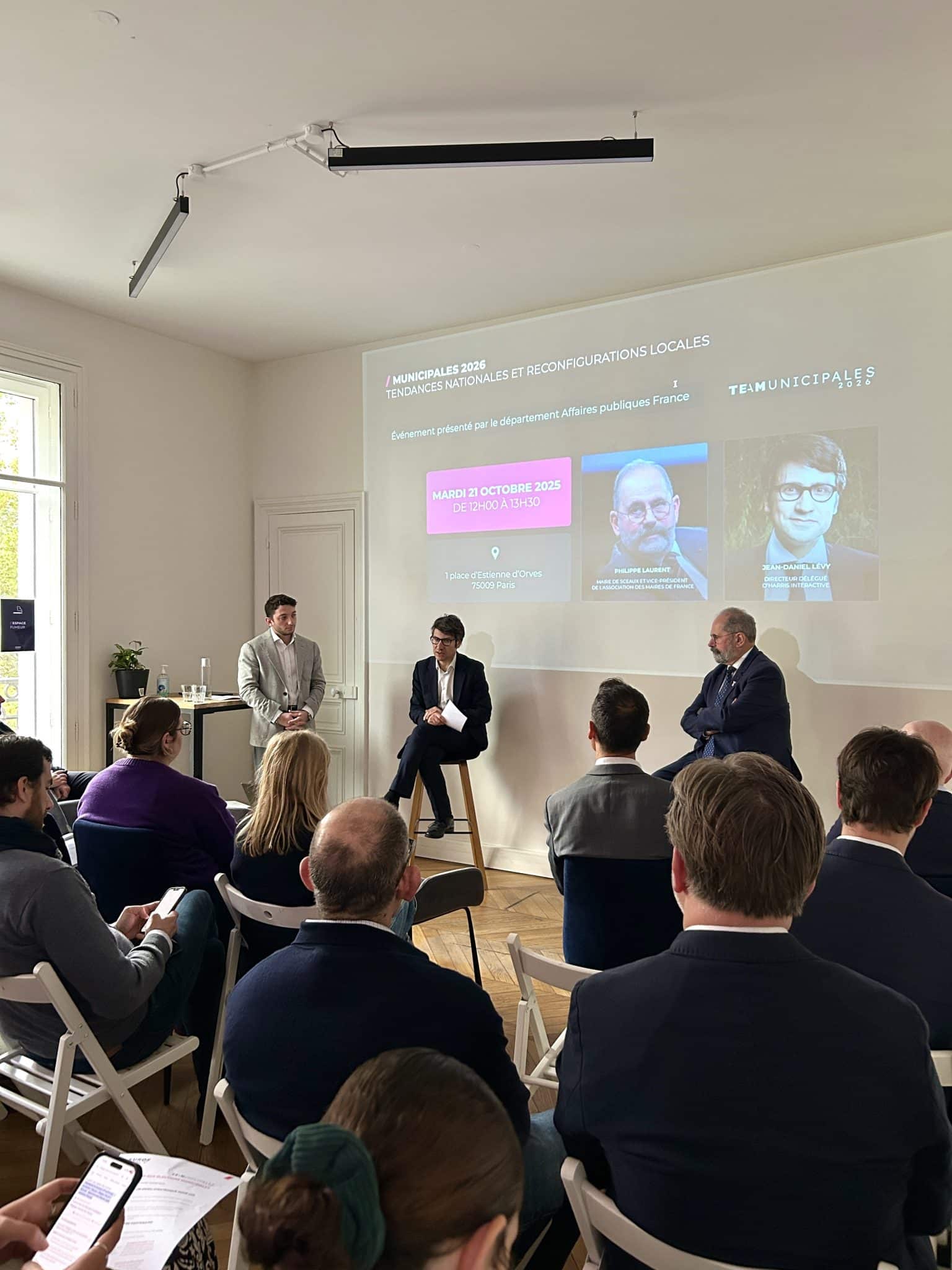
In both Brussels and Paris, Euros / Agency Group supports companies, trade associations and organisations in understanding European policies, structuring their public affairs strategy and effectively communicating their positions to decision-makers. This event, organised under the leadership of Mathieu Collet and led by Marie de Monjour and Pierre-Antoine Mondoloni, illustrates Euros / Agency Group’s commitment to creating meaningful, practical forums for dialogue that are directly linked to the major industrial challenges facing Europe.